
Most Polymarket wallets lose. The public record says 15.9% — and also about 30%.
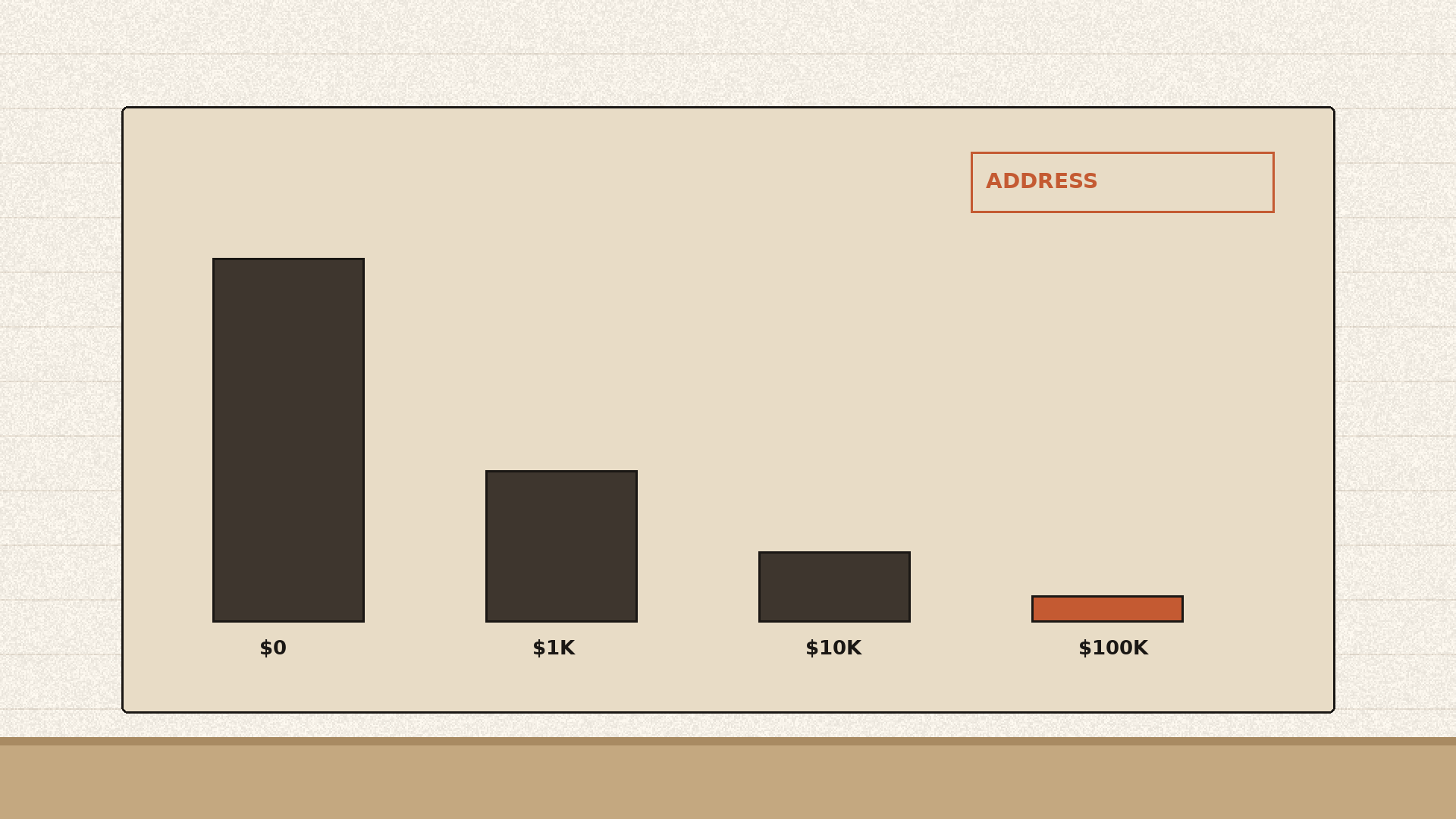
Sergeenkov’s all-address cut through 1 April 2026 is 15.9% in realized profit. Other public cuts sit near 30%. Neither is an active-trader rate, and a named whale does not rewrite the ladder.
By Jordan NabigonPublished 7 min read
What to take away
- Sergeenkov, data through 1 April 2026: 15.9% of about 2.5 million addresses in realized profit; 84.1% red. Unit is addresses with on-chain USDC flows, not active traders.
- About 30% in DeFi Oasis (December 2025, secondary) and in a Reichenbach and Walther author note (LinkedIn opened this run) is a different method and/or sample.
- Akey et al. abstract (12 June 2026): the top 1% of users with positive PnL capture 76.5% of profits.
- A reader cannot copy a fill, a fee path, or a next-event map from either rate.
Most addresses on this venue are not in realized profit. Sergeenkov’s all-address cut through 1 April 2026 is 15.9% in the black and 84.1% in the red, across about 2.5 million addresses. Other public cuts sit near 30%. Those are different objects. A named whale does not rewrite them.
The hook that travels is “prediction markets are a losing game, except.” The public record will support the first half if you name the unit. The “except” is not a system. It is a short list of dated measurements.
What 15.9% is counting
Andrey Sergeenkov, opened this run, still prints the pair on the page: 15.9% in profit / 84.1% in the red. The unit is an address with on-chain Polymarket USDC flows — buys and sells, redemptions, plus splits and merges — minus ten system addresses. He says so in the methodology, even though the headline says “traders.” Data through 1 April 2026. Realized PnL only.
Tokens still sitting on an unresolved market look like cash that left. He writes that he checked 96% of trading volume was on already-resolved markets. That is his check, as of that cutoff, not a live recompute. Every number is an address, not necessarily a person.
Do not upgrade that to “16% of active Polymarket traders are profitable.” The 0.1-point rounding to “16%” is Sergeenkov’s own, when he compares himself to DeFi Oasis. The precise published headline pair is 15.9 / 84.1. A recency-filtered “active trader” rate is UNKNOWN. No source opened for this piece defines “active” by a 7-day or 30-day window and publishes the share of those wallets that are in profit.
Why about 30% is also in the literature
Sergeenkov names the gap. DeFi Oasis, in December 2025, showed 30% of 1.7 million addresses in profit. He got 16%. Both sides, he says, use incoming minus outgoing USDC. He includes splits and merges; DeFi Oasis, in his account, did not. “When splits are left out, an address looks more profitable because one category of expenses is simply invisible.” The address base also grew from 1.7 million to 2.5 million in the three months between the studies.
CryptoNews, last updated 29 December 2025, restates that DeFi Oasis cut as about 70% realized losses and 30% realized profit among more than 1.7 million addresses. The original Dune dashboard was not re-opened for this piece; treat the 30% as attributed secondary.
A third ~30% is not DeFi Oasis. On a public LinkedIn post opened this run, Martin Walther wrote that a major update of the Reichenbach & Walther Polymarket study still found: “Only roughly 30% of traders make profits. This fraction has stabilized in the last couple of months.” He describes the dataset as 500 million trades and about 2 million traders. The SSRN PDF was not opened. “Active” is not defined in the post. So this 30% is an author statement, not a table we read.
The “except” the public data actually documents
If “except” means a second percentage you can quote as “meaningfully profitable,” that figure is UNKNOWN. Sergeenkov uses the word. He writes that the gap between any profit and meaningful profits is so large that he charts on a log scale. That is his language.
His ladder, data through 1 April 2026, about 2.5 million addresses:
- Realized PnL above $0: 15.9%
- Lifetime above $1,000: 2%
- Lifetime above $10,000: 0.32%, roughly 8,000 addresses
- Lifetime above $100,000: 840 addresses, 0.033%
Among about 6,600 addresses with average monthly profit above $5,000, he writes that 53% earned that average in a single month, 73% were active no more than two months, and 172 addresses — 2.6% of that subset — were active more than a year. In any single month, 0.98% of all addresses earned more than $5,000; two months in a row 0.1%; three 0.03%; four 0.015%.
A CEPR discussion-paper abstract (Akey, Grégoire, Harvie, Martineau; published 12 June 2026) does not give a loss-rate percentage. It does say this, on 588 million trades and $67 billion in volume: the top 1% of users with positive PnL capture 76.5% of profits. Read the denominator. That is the top 1% of users who already have positive PnL, not the top 1% of all users. The full PDF was not opened.
The method piece that owns these cuts is already live: How many Polymarket wallets are in profit — and why 16% and 30% are both in the literature. This page is the hook. That page is the literature.
What a reader cannot copy
You cannot copy a fill from a percentage. 15.9% and ~30% are historical, realized, address-level counts with stated cutoffs. They are not a map of the next contract.
You cannot copy the fee path. A Yes+No sum that looks like a dollar is still not a lock. Complementary prices add toward a dollar of collateral before spread, size, two orders, and fees.
You cannot copy the next event. We did not rerun the query. Current 16 August 2026 tape is UNKNOWN from these pages.
This is not a system. It is a set of opened pages that do not agree on one rate, and that refuse to call either rate “active.”
The reading method that names what eats an edge first is the free ebook — literacy, not a tip sheet. JOIN FREE.
How AI was used here
Research packet, draft, reviewer/editor pass under 2026-08-15 auto-approve standing order.
Sources
- How Many Traders Are Profitable on Polymarket UnverifiedAndrey Sergeenkov (sergeenkov.com) · retrieved 15 August 2026
- DP21615 Who Wins and Who Loses in Prediction Markets? Evidence from Polymarket primaryCEPR Press · retrieved 16 August 2026
- 70% of Polymarket Traders Lost Money as Top 0.04% Captured Most Profits: Data strong_secondaryCryptoNews · retrieved 16 August 2026
- Martin Walther LinkedIn post on the Polymarket study update primaryMartin Walther · retrieved 16 August 2026
Read next
- How many Polymarket wallets are in profit — and why 16% and 30% are both in the literature
Sergeenkov’s all-address cut through 1 April 2026 is 15.9% in realized profit. DeFi Oasis and a Reichenbach & Walther author note sit near 30%. The difference is mostly method. None of these is an “active trader” rate.
- Why the Number on the Screen Is Not Always the Number You Can Trade
The displayed price is often a midpoint. Buyers pay the ask. Taker fees apply on many categories. A Yes+No sum that looks like $1 can still not be a lock.
- Why Complementary Prices Should Add Up to About a Dollar
Yes and No are two sides of one dollar of collateral. A sum under $1 or over $1 is a fact about complementary prices — before fees, spread, and fill risk — not a verdict that the event is wrong.